Private label wet wipes are made by a contract manufacturer to your specification and sold under your own brand. Getting them right comes down to a handful of decisions: the type of wipe, the nonwoven fabric, the lotion, the pack format and the claims you print on it. This guide walks through each one so your brief is clear before you ask for a quote.
Types of private label wet wipes
The category splits into products with quite different requirements. Choosing the type comes first, because it shapes the formula, the regulatory route and the packaging.
- Baby wipes: the largest and most competitive segment. Buyers look for gentle, low-fragrance or fragrance-free lotions, soft fabric and a reliable resealable lid.
- Cosmetic and facial wipes: make-up removal, cleansing and refreshing wipes. The lotion often includes cleansing agents, and the sheet is usually smaller and softer. Claims such as “for sensitive skin” or “removes waterproof make-up” need testing behind them.
- Antibacterial and surface wipes: for kitchens, bathrooms, hands-free cleaning or general household use. The fabric is usually stronger and the lotion contains cleaning or disinfecting agents. These sit closer to household chemicals than to cosmetics.
- Intimate wipes: for personal hygiene, often with a mild, pH-conscious formula. Packs are frequently small, discreet and designed to travel.
What to specify in your wet wipes brief
You do not need every technical term, but you should be able to describe what the product must do and how it should feel.
Nonwoven substrate
The fabric is the backbone of a wet wipe. Spunlace nonwovens are common, made from blends of viscose, polyester, cotton or other fibres. Describe what matters to you:
- Feel: soft and cloth-like for baby and facial wipes, more textured for cleaning.
- Weight and thickness: a lighter sheet keeps cost down; a heavier, thicker sheet feels premium and holds up better on tough tasks. Ask the manufacturer to show you samples at different weights rather than picking a figure on paper.
- Fibre content: many buyers now ask for plant-based or plastic-free fibres. This affects price, strength and the claims and markings on pack, so decide early.
- Pattern: plain, embossed or textured surfaces change how the wipe cleans and feels.
Sheet size and folding
Sheet dimensions and the fold (for example a Z-fold or a different interleaved fold) decide how wipes dispense one at a time and how thick the stack is. Baby and cleaning wipes tend to be larger; facial and intimate wipes are often smaller.
Lotion, fragrance and preservation
The lotion is mostly purified water plus functional ingredients: mild cleansers, skin conditioners, plant extracts or cleaning agents, depending on the type. Things to decide:
- Fragrance-free, lightly scented or a signature fragrance.
- How wet the wipe should feel. Too dry disappoints; too wet drips and can leak.
- The preservative system. Because wipes are a wet product in a pack that is opened repeatedly, preservation is essential to keep them safe through use. Many brands ask for formulas without certain preservatives; your manufacturer and safety assessor will tell you what is workable for your type and market.
Pack count and closure
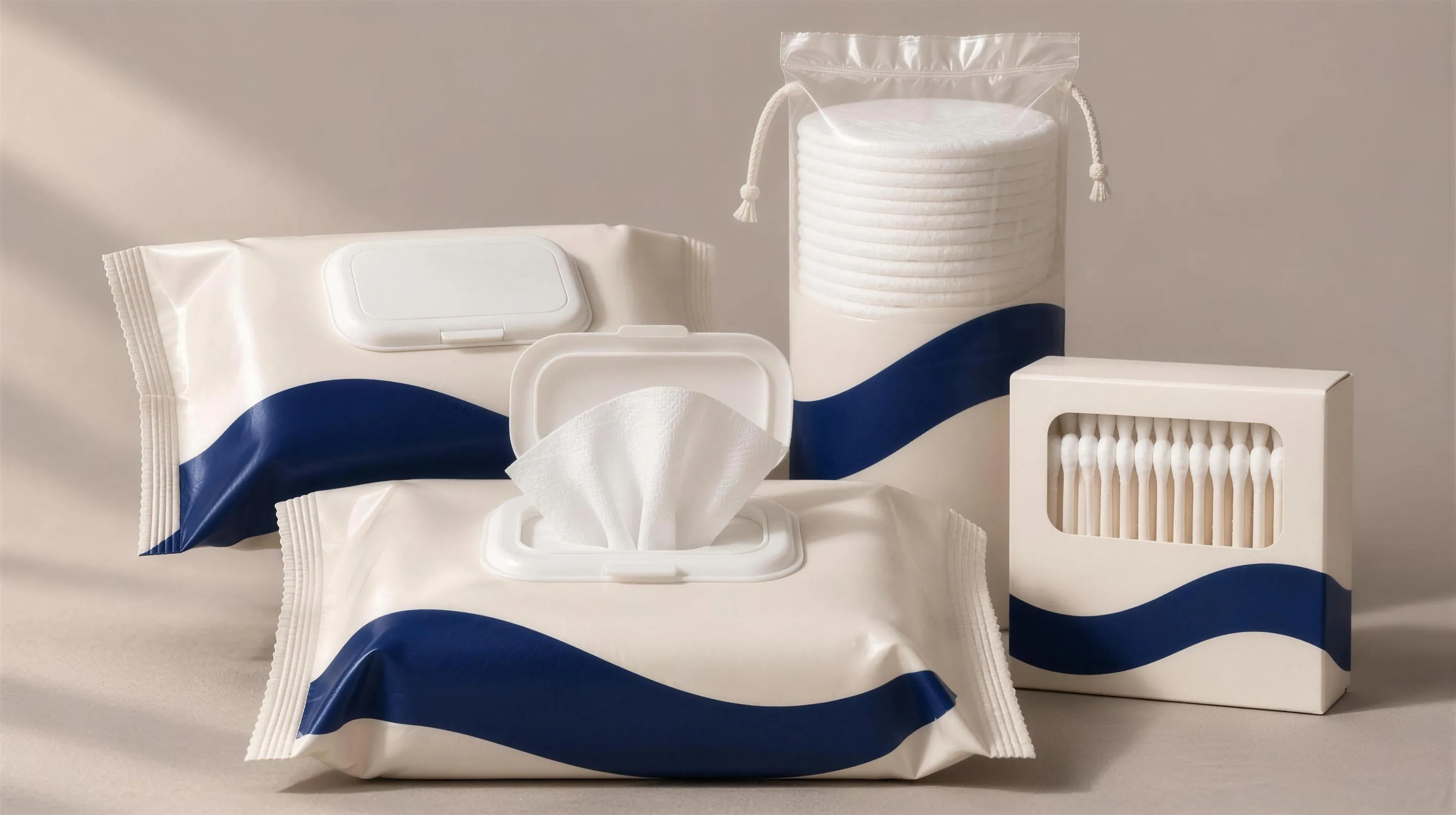
Pack count (the number of wipes per pack) should match how your customers buy: large family packs, multipacks or small travel packs. Closure options include:
| Closure | Typical use | Points to consider |
|---|---|---|
| Rigid plastic lid | Baby wipes, large household packs | Best reseal, premium look, higher cost |
| Resealable sticker label | Mid-size packs, many categories | Lower cost, reseal quality varies |
| Flowpack without reseal | Small travel or single-use packs | Cheapest, lotion can dry once open |
| Canister or tub | Surface and cleaning wipes | Good for pull-through dispensing |
| Individual sachets | Intimate, hospitality, travel | Hygienic, higher cost per wipe |
The regulatory angle differs by wipe type
This is where wet wipes catch many new brands out. The same pack format can fall under very different rules depending on what is in the lotion and what you claim on the front.
- Cosmetic wipes: baby, facial and intimate wipes applied to the skin are generally treated as cosmetics in many markets. In the EU and UK this means the EU Cosmetics Regulation (EC) No 1223/2009 or its UK equivalent, which requires a Responsible Person, a product safety report and an ingredient list on pack.
- Surface and household wipes: cleaning wipes often fall under chemical and detergent rules, including CLP labelling in the EU where the lotion requires it.
- Antibacterial and disinfecting claims: once you claim to kill bacteria or viruses on a surface, the product may be treated as a biocide. In the EU this falls under the Biocidal Products Regulation (EU) No 528/2012, and the active substance and product must be authorised for that use. A softer “cleaning” claim is a very different product from a “disinfecting” one.
- Flushable claims: be very careful. Many wipes do not break down in sewer systems, and “flushable” claims face close scrutiny from regulators and water authorities. Unless the product has been tested against a recognised standard for the market, it is safer to print clear “do not flush” guidance. In the EU, wet wipes that contain plastic also carry specific marking requirements on pack.
Requirements differ by country and change over time, so always confirm the rules for each destination market with a qualified adviser before you finalise claims and artwork.
Packaging and shelf presence
Wet wipes are bought quickly from a crowded shelf, so the pack must say at once what it is and who it is for.
- Make the type obvious: baby, facial, intimate or surface should be clear from a distance, often through colour coding across the range.
- Put the key benefit on the front: fragrance-free, sensitive, plant-based fibres, extra thick.
- Show the wipe count clearly; shoppers compare it.
- Check the film. Flowpack film has to protect the lotion from drying out, print well and survive transport.
Mandatory text (ingredients, warnings, disposal guidance, batch code, address of the responsible party) needs space in the design from the start, not squeezed in at the end. Our page on wet wipes and hygiene supply gives an overview of the product group, and packaging covers formats and materials.
Sampling and approval
Never approve a wet wipe from a specification sheet alone. A good sampling round should let you check:
- Feel and strength of the fabric, wet and dry.
- Lotion load, fragrance and how the skin feels afterwards.
- Dispensing: do wipes come out one at a time, or in a clump?
- Seal and closure: does the lid or sticker reseal properly after repeated use?
- Print and colour on the actual film, not only on screen.
Keep an approved reference sample: it becomes the standard production is checked against. In the projects Mefsa manages, that approved sample is what quality control compares the goods with before loading.
Shelf life and storage
Wet wipes have a limited shelf life because the lotion can dry out and the preservative system has to keep working. Shelf life is set by the manufacturer and safety assessor based on stability testing, and many markets require it on pack in some form, either as a date or as a period after opening.
- Store finished goods away from direct heat and sunlight.
- Rotate stock on a first-in, first-out basis.
- For long sea freight or hot destinations, discuss packaging and pallet protection before shipping.
- Ask for batch coding on every pack so any issue can be traced.
Frequently asked questions
What is the minimum order for private label wet wipes?
It depends on the manufacturer, the pack format and how much custom printing is involved. Printed film is usually the main constraint, since it is produced in rolls. Sharing your expected volumes and number of variants early helps you get a realistic answer.
Can I use my own formula for wet wipes?
Yes, if you already have a formula, a manufacturer can often produce it, subject to safety review for your market. Many brands instead start from an existing base lotion and adjust fragrance and active ingredients.
Are baby wipes classed as cosmetics?
In many markets, including the EU and UK, baby wipes used on the skin are generally treated as cosmetic products. That brings requirements such as a safety assessment and a responsible person. Always check for your destination country.
Can I call my wet wipes flushable?
Only if you can back it up with testing against a recognised standard accepted in your market. Otherwise, clear “do not flush” guidance is the safer and more honest choice.
Start your private label wet wipes project
If you are planning a wet wipes range, start with the type, the target customer and the markets you will sell in. Mefsa Foreign Trade works with brands from the first brief: sourcing the right manufacturer in Türkiye, managing samples, following production on site and handling export to delivery, with packaging design by our in-house design team. Learn more about our brand development approach, or send us your wet wipes project and we will come back to you.