Importing from Türkiye is straightforward once three things are clear: which Incoterm decides who pays and who carries the risk, which transport mode suits your volume, and which documents must travel with the goods. This guide walks through each one in plain language, so you can read a supplier’s offer and know exactly what is included and what is still on your side.
Incoterms 2020: who pays, who bears the risk
Incoterms are standard trade terms published by the International Chamber of Commerce. The current version, Incoterms 2020, defines where the seller’s responsibility ends and the buyer’s begins. They do not decide ownership or payment terms, which belong in your contract, but they do decide costs, risk and who handles which formalities.
These are the terms you will see most often in offers from Türkiye:
| Incoterm | Seller arranges and pays | Risk passes to buyer | Import customs and duties |
|---|---|---|---|
| EXW (Ex Works) | Goods ready at the factory | At the seller’s premises | Buyer |
| FOB (Free On Board) | Export clearance, delivery on board the vessel at the Turkish port | Once goods are on board | Buyer |
| CIF (Cost, Insurance and Freight) | Export clearance, sea freight and minimum insurance to the destination port | Once goods are on board at origin | Buyer |
| DAP (Delivered At Place) | Transport to your named address, ready for unloading | At the named place | Buyer |
| DDP (Delivered Duty Paid) | Everything, including import clearance and duties | At the named place | Seller |
A few practical points that are easy to miss:
- EXW looks cheapest but leaves the most work to you. The buyer is technically responsible for export clearance in Türkiye, which is awkward for a foreign company. Many buyers prefer FCA (Free Carrier) or FOB instead.
- FOB and CIF are sea terms. For containerised cargo, FCA or CIP are often recommended because the container is handed over at a terminal, not loaded onto the ship by the seller.
- Under CIF, the risk passes at origin, even though the seller pays freight to your port. If goods are damaged at sea, the claim goes through the insurance policy, which is why the cover level matters.
- DDP means the seller acts as importer of record in your country. This is not possible or practical for every product or destination, so confirm it early.
Sea freight from Türkiye: FCL vs LCL
Most longer routes from Türkiye travel by sea. The main choice is between a full container and shared space.
FCL (Full Container Load)
You book a whole container, typically 20-foot or 40-foot, sometimes high cube for light, bulky goods. The container is sealed at loading and opened at your end.
- Lower cost per unit once volume is sufficient
- Less handling, so lower risk of damage or loss
- Predictable schedules and simpler tracking
LCL (Less than Container Load)
Your pallets share a container with other shippers’ cargo, consolidated and later deconsolidated at warehouses.
- Suits trial orders and smaller volumes
- More handling points, so packaging must be robust
- Transit is often longer because of consolidation, and destination charges can add up
A useful rule of thumb: once LCL charges approach the cost of a container, FCL usually makes more sense, and it gives you room to add products.
Road freight from Türkiye to Europe
For destinations in Europe, road freight is a common alternative to sea. Trucks may travel fully by road or combine road with a ferry crossing.
- Speed and flexibility: often faster door to door than sea for continental Europe, with direct delivery to your warehouse.
- Full or part loads: full truckloads (FTL) and groupage (part loads) both exist, similar to FCL and LCL.
- Documents: road shipments move under a CMR consignment note rather than a bill of lading, and transit procedures apply across borders.
- Trade-off: generally higher cost per unit than a full sea container, but lower inventory in transit and fewer touch points.
The right mode depends on your volume, the product’s value and shelf life, and how quickly you need stock on the shelf.
Mixed containers and loading plans
You do not have to fill a container with one product. A mixed container combines several products, sometimes from different manufacturers in Türkiye, into one shipment. This is common for retailers and wholesalers building a range.
Good planning makes mixed loads work:
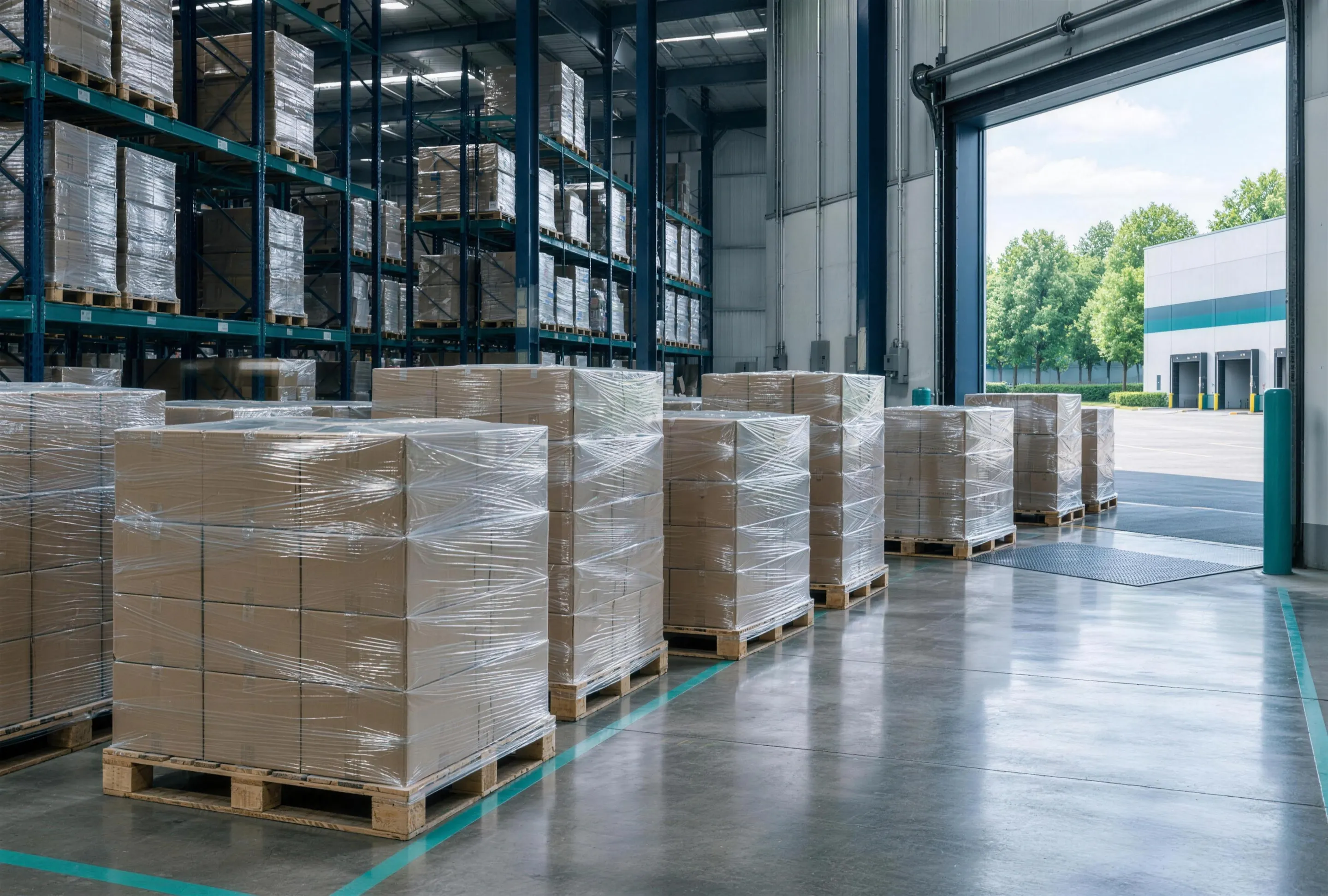
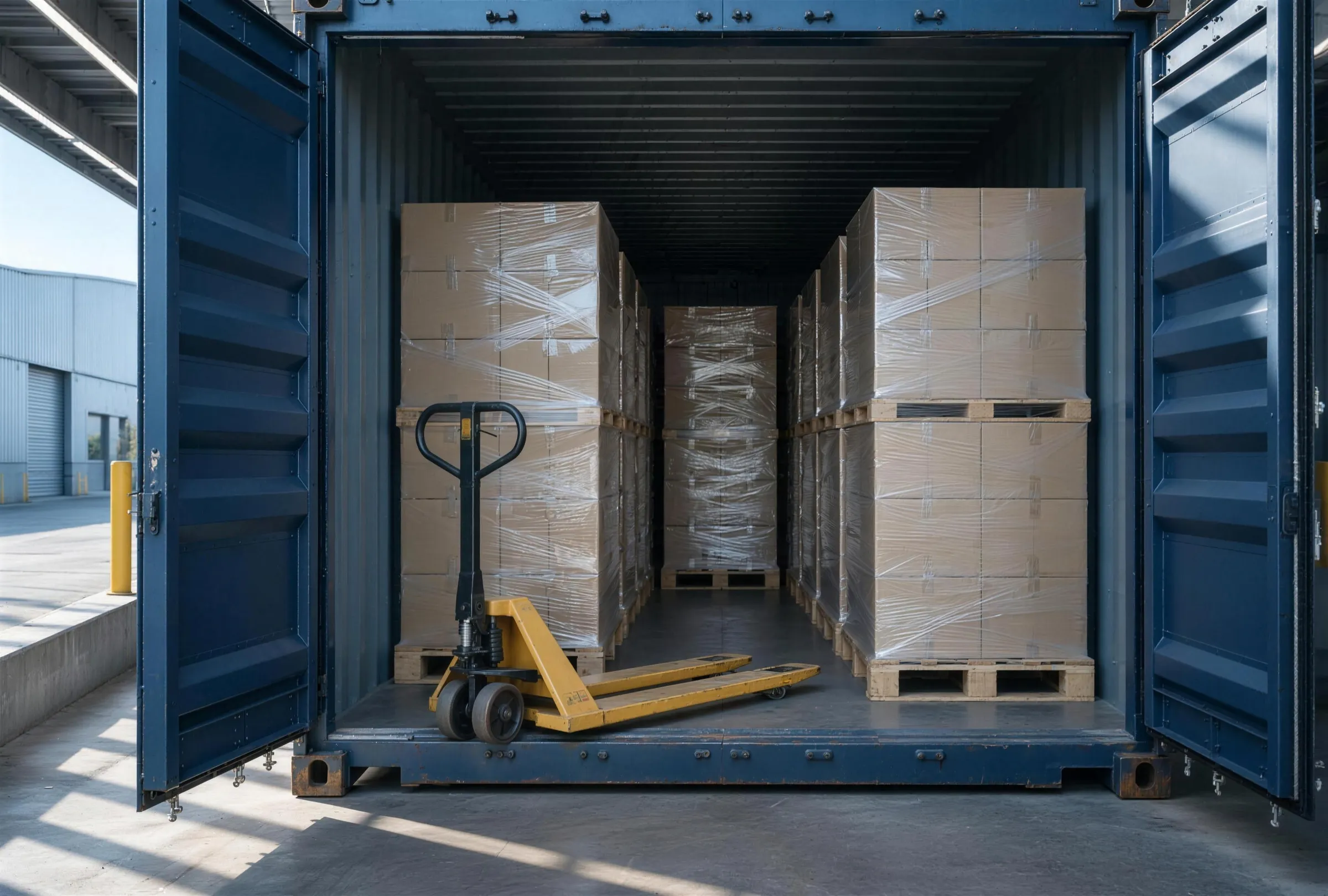
- Palletisation: agree pallet type (Euro or industrial), maximum height, number of layers and whether pallets are stretch wrapped and corner protected. Your warehouse or retailer may have specific requirements.
- Weight and volume: heavy goods such as liquids reach the weight limit before the container is full, while light goods such as nappies or textiles fill the volume first. Combining the two often uses space more efficiently.
- Compatibility: keep food away from cleaning products and strong odours, and follow any rules for goods classed as dangerous.
- Loading order: load by delivery or unloading sequence, with heavier pallets at the bottom and secured to avoid shifting.
- Labelling: clear pallet labels matching the packing list speed up receipt and any customs inspection.
Export documents from Türkiye: the core set
Documents are where most delays happen. Requirements depend on the product and the destination, but a typical shipment includes:
- Commercial invoice: seller, buyer, description, HS code, quantities, values, currency and Incoterm. Customs uses it to calculate duties.
- Packing list: pallet by pallet contents, net and gross weights, dimensions. It must match the invoice and the physical load.
- Bill of lading (sea) or CMR (road): the transport document. A bill of lading can also be a document of title, so it matters for payment by documents.
- Certificate of origin: confirms where the goods were produced.
- Movement certificates: in trade with the EU, an A.TR is used for many industrial goods under the EU and Türkiye customs union, while a EUR.1 or an origin declaration applies under preferential agreements, for some agricultural products, and with other partners such as the UK. These can reduce or remove duties when the conditions are met.
- Product-specific certificates where required: for example health or phytosanitary certificates for some foods, analysis reports, or compliance documentation for cosmetics and detergents.
Treat this list as a starting point. Which certificate applies, and whether preferential duty is available, depends on the HS code, the origin rules and the destination country, so confirm it with your customs broker before the goods ship.
Customs clearance, insurance and tracking
Clearance at destination
Unless you buy DDP, import customs clearance is the importer’s side. That usually means appointing a customs broker, paying duties and import VAT, and meeting local rules on labelling and product compliance. Having correct documents from origin makes this step much faster. If you are launching a product in a regulated category such as personal care and cosmetics, check the destination’s requirements well before the first order.
Cargo insurance
Under CIF and CIP the seller buys insurance, but the minimum cover under CIF is limited. Many importers arrange their own all-risk cover, especially for mixed or high-value loads. Under EXW, FCA, FOB and DAP, insurance is usually the buyer’s decision.
Tracking
Sea containers can be followed by container or booking number on the carrier’s system, and road shipments through the forwarder. Ask for loading photos, seal numbers and the estimated arrival, and share the documents with your broker before the goods arrive.
Frequently asked questions
What is the best Incoterm when importing from Türkiye?
There is no single best term. FOB or FCA suit buyers who have their own forwarder, CIF or DAP suit buyers who want the seller to arrange transport, and DDP suits buyers who want a landed price. Compare the total landed cost, not only the offer price.
Do I need an A.TR or a EUR.1 certificate?
It depends on the product and where it is going. In EU trade, the A.TR covers many industrial goods, while the EUR.1 is used for some agricultural products and with other partners. Your customs broker can confirm which one applies to your HS code.
Is FCL or LCL better for a first order?
LCL is often chosen for trial orders because you pay only for the space you use. If your volume is close to a container, FCL is usually safer and cheaper per unit, and a mixed container lets you combine several products.
Who handles customs clearance at destination?
The importer, unless the goods are sold DDP. The seller provides the export documents, and your customs broker uses them to clear the goods, pay duties and release the shipment.
Planning your shipment from Türkiye
Getting shipping right starts at the offer stage: the Incoterm, the pallet plan and the document list should be agreed before production begins. At Mefsa Foreign Trade, we prepare the export documents and manage customs and freight for every shipment leaving Türkiye, and we follow it until delivery through our hubs in the UK, France, Libya and Somalia. You can read more about how we work.
If you have a product you want manufactured and shipped from Türkiye, send us your project and we will come back with a clear offer, including how it will travel.