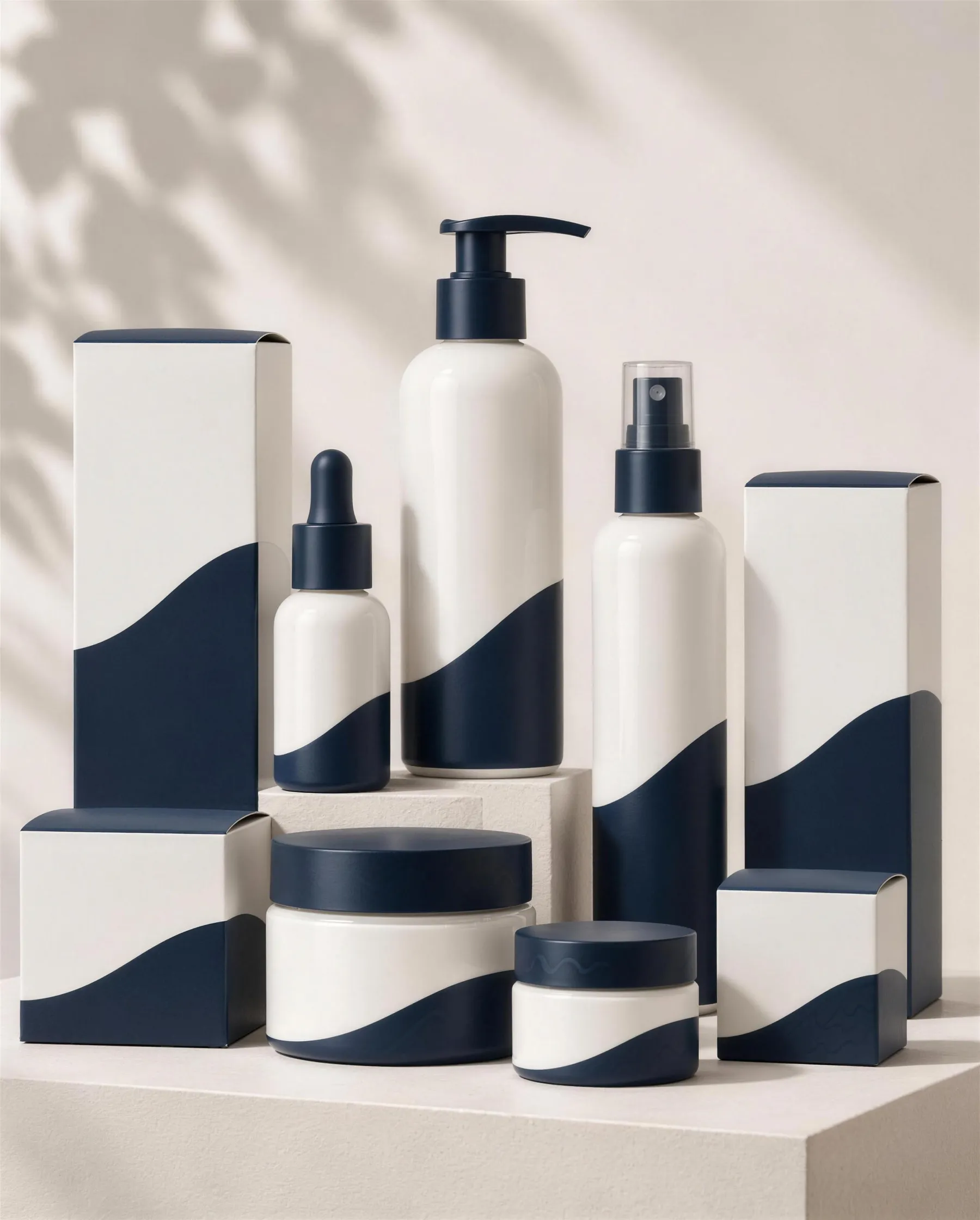
A private label minimum order quantity (MOQ) is the smallest run a manufacturer can produce for you without losing money, and it is set less by the factory’s mood than by line setup, raw material minimums and printed packaging. Samples and lead times follow the same logic: every new element you add, from a custom formula to a printed film, adds a step to approve and a supplier to wait for. Once you understand what drives each one, you can negotiate better, start smaller and plan a launch date you can actually hit.
What MOQ means in private label manufacturing
The minimum order quantity is the lowest number of units, cartons or batches a manufacturer will accept for one product. In private label, it usually applies per SKU (each scent, size or variant counts separately), and sometimes per packaging component as well.
MOQ is not a single number that a factory picks at random. It is the point where the fixed costs of a run are spread over enough units to make the price reasonable for you and the job worthwhile for them. That is why two factories making a similar product can quote very different minimums: their equipment, batch sizes and supplier terms are different.
Why minimum order quantities exist
Several separate costs sit behind every MOQ. Knowing which one is driving your quote tells you where there is room to move.
Line setup and changeover
Every production run starts with cleaning the line, changing moulds or filling heads, adjusting settings and running test units that are often discarded. That time and waste cost the same whether the run is short or long, so short runs carry a much higher cost per unit.
Batch size of the formula
Liquids, creams, detergents and many food products are mixed in tanks of a fixed size. A tank that is half full may not mix properly, so the factory’s smallest workable batch becomes a natural floor for your order.
Raw material minimums
Factories buy ingredients, fragrances, fibres or pulp from their own suppliers, who also have minimums. If your formula needs a special fragrance or an ingredient the factory does not normally stock, the quantity they must buy can set your MOQ.
Printed packaging minimums
This is often the biggest driver. Printed flexible films, shrink sleeves, self-adhesive labels, folding cartons and printed shipping boxes are produced by packaging suppliers with their own setup costs: printing plates or cylinders, colour matching and machine time. A custom printed film for nappies or wet wipes, for example, can require a much larger quantity than the product itself would. Your MOQ may really be your packaging supplier’s MOQ.
How to start smaller with private label
If the quoted minimum is above what you can sell or store, there are practical ways to bring it down without compromising the brand.
- Use stock packaging with labels. Standard jars, bottles, tubes and pouches that the factory already holds, finished with your own printed label or sticker, avoid the large minimums of custom printed packaging.
- Choose an existing or shared formula. A proven base formula that the factory already produces in volume can often be run in smaller quantities than a custom recipe. You can still differentiate with fragrance, colour or claims where allowed.
- Launch with fewer SKUs. Three strong variants usually make more sense than ten weak ones. Each extra SKU multiplies the minimums for formula and packaging.
- Share print runs across variants. Some packaging suppliers can print several designs on one run, or you can use one printed base with variant stickers.
- Build mixed containers. Combining several products, or several factories’ output, into one shipment means each line can be ordered in a smaller quantity while freight stays efficient.
- Plan a first run and a reorder. Accepting a slightly higher unit price on the first order, with a lower price agreed for reorders at higher volumes, keeps your initial risk under control.
Private label sample stages and what to evaluate
Samples are where most launch problems are caught or missed. They typically come in stages, and each stage answers a different question.
Stock samples
These are existing products from the factory’s range, sent so you can judge basic quality, texture, absorbency, taste or performance. Evaluate them against the product you want to compete with, and test them in real use, not only on the desk.
Custom formula samples
If you are adjusting a formula or developing a new one, the lab produces small trial batches. Assess fragrance, colour, consistency, taste or cleaning power, and ask how the sample will behave at production scale. Stability and compatibility with the chosen packaging matter as much as first impressions.
Packaging mock-ups and print proofs
Mock-ups show the real shape, size and finish of the pack with your design applied. Check legibility at shelf distance, colour accuracy, barcode placement, mandatory label text in each destination language, and how the pack stands, closes and stacks. A digital proof is not the same as a printed proof, so confirm colours on the actual material where possible.
Pre-production or golden sample
This is the reference unit taken from the production setup, or approved just before the run starts. Once you sign it off, it becomes the standard that the full order is checked against. Keep one yourself, and make sure the factory keeps one too.
What lengthens or shortens private label lead times
Lead time is the period from a confirmed order to goods ready for shipment, although many buyers also count development and transport. It depends on the following factors far more than on the product category itself.
| Factor | Tends to lengthen lead time | Tends to shorten lead time |
|---|---|---|
| Formula | New or custom formula needing lab trials and stability checks | Existing formula already in regular production |
| Packaging | Custom printed films, cartons, sleeves or new moulds | Stock packaging with printed labels |
| Raw materials | Special ingredients, imported components, scarce materials | Materials the factory stocks and buys in volume |
| Seasonality | Peak periods for the category or the factory’s other customers | Ordering ahead of known busy seasons |
| Approvals | Several rounds of artwork, sample or proof revisions | Clear brief, one decision maker, fast sign-off |
| Documents and compliance | New labelling checks, product dossiers or registrations for the destination market | Requirements confirmed early and prepared in parallel |
| Order size and SKU count | Many SKUs, each with its own setup | Fewer SKUs, consolidated runs |
| Logistics | Late booking, peak freight periods, missing export documents | Freight and paperwork arranged before production ends |
Two points are worth stressing. First, approvals on your side are often the slowest part of the whole process. Second, documents can hold up goods that are already finished. For example, cosmetics sold in the EU need a Responsible Person and a product safety report under Regulation (EC) No 1223/2009, detergents need CLP compliant labelling, and EU–Türkiye shipments may need an A.TR or EUR.1 movement certificate. Requirements differ by country and product, so confirm them for your destination market at the start.
How to plan a private label launch timeline backwards
The most reliable way to plan is to start from the date your product must be on the shelf, or live online, and work backwards.
- Shelf date. Fix the date the retailer, distributor or your own store needs stock available.
- Delivery and customs. Subtract transit time, port handling, customs clearance and inland delivery to your warehouse, plus time to distribute to stores.
- Loading and quality control. Allow time for final inspection, any rework and booking freight.
- Production. Subtract the factory’s production time for the quantities and SKUs you need.
- Packaging delivery to the factory. Printed packaging must arrive before production starts, so its own production time sits in front of yours.
- Final approvals. Golden sample, print proofs and label text must be signed off before packaging is printed.
- Development and samples. Formula trials, mock-ups and any revision rounds come before that.
- Brief and sourcing. At the very start, you need a clear brief and the right manufacturer.
If the dates do not fit, the table above shows where to gain time: switch to stock packaging, use an existing formula, cut SKUs or move the launch. Add a buffer at each stage rather than one at the end, because delays early in the chain push everything behind them.
Frequently asked questions
What is a typical MOQ for private label products?
There is no single typical figure, because the minimum depends on the product category, the factory’s batch and line sizes, and above all on packaging. Custom printed packaging usually raises the minimum more than the product itself does. Ask the manufacturer which component is setting the MOQ.
Can I start private label with a low minimum order quantity?
Often, yes. Using stock packaging with your own labels, an existing formula and fewer SKUs are the most common ways to start smaller. Expect a higher unit price in exchange for the lower volume.
Do I have to pay for private label samples?
Practice varies. Stock samples are often inexpensive or free apart from shipping, while custom formula development and printed mock-ups usually carry a cost because they use lab and supplier time. Clarify this before samples are made.
Why does my private label order take longer than quoted?
The most common causes are late artwork or sample approvals, printed packaging arriving late at the factory, raw material shortages and seasonal peaks. Missing destination market documents can also delay shipping after production is finished.
Planning your private label project with Mefsa
When you work with Mefsa, one team handles your project from the brief to delivery: finding the right manufacturer in Türkiye, managing samples, following production on site, checking quality before loading and arranging export documents and freight. Our in-house design team prepares packaging artwork and print approval, which helps keep proof rounds short.
If you are building a new range, read more about our brand development service or browse product groups such as personal care and cosmetics and packaging. When you are ready, send us your project and we will talk through the minimums, samples and timeline that fit your launch.