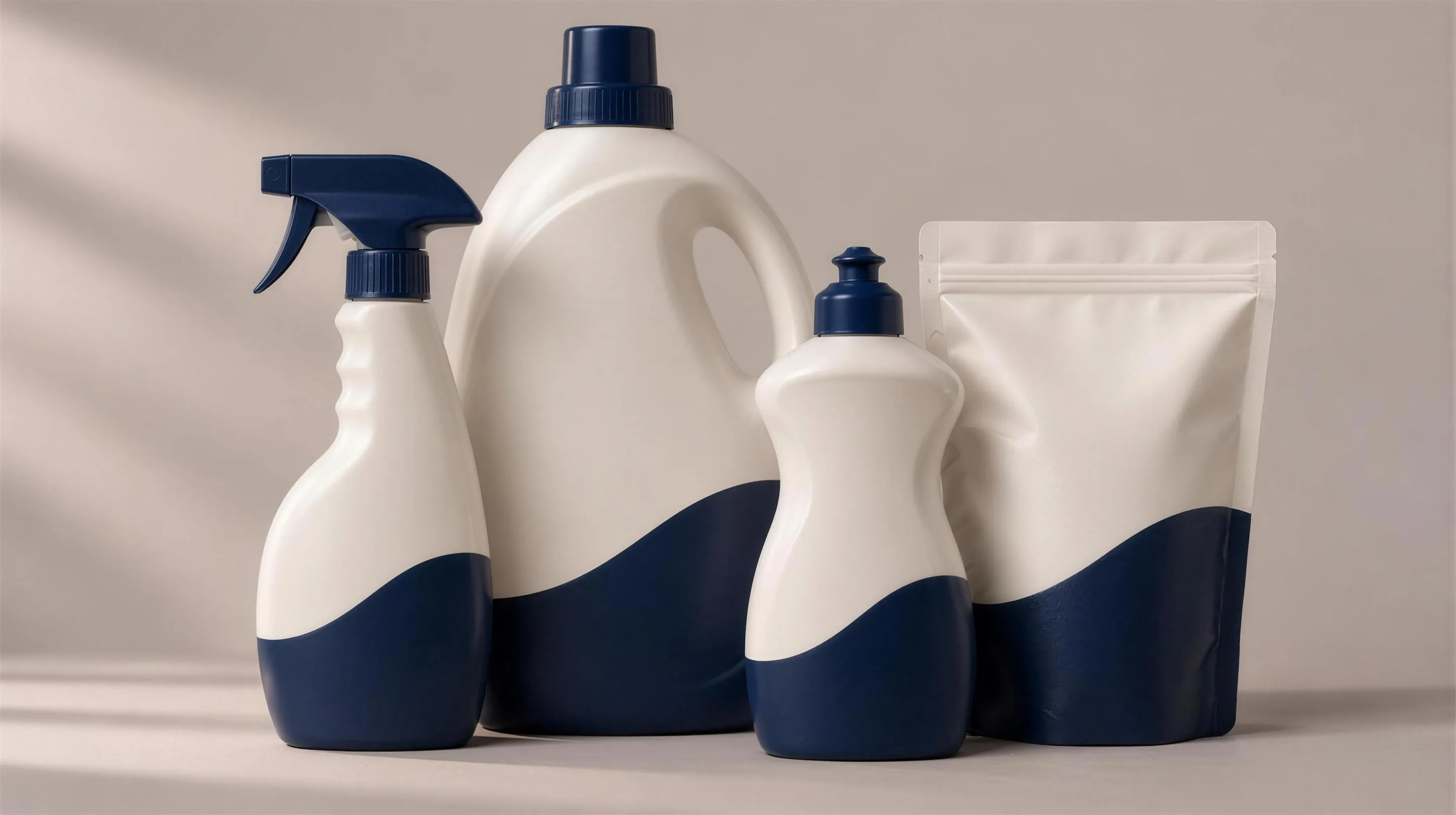
Launching private label cleaning products means deciding which products form your core range, how strong each formula should be, how it is packed and how it is labelled for the market where it will be sold. Get those four decisions right before the first production run and most of the costly surprises (relabelling, leaking pallets, unhappy buyers) never happen. This guide walks through each step in the order a buyer actually meets them.
Start with a focused core range
A household cleaning range does not need to cover every shelf on day one. Most new brands begin with the products people buy every week and add specialist items once the first lines are selling.
A typical starter range looks like this:
- Washing-up liquid: the highest rotation item in most baskets and the one shoppers compare most closely on price and foam.
- Multi-purpose and surface cleaners: a trigger spray for kitchens and bathrooms, often with a refill bottle.
- Bleach-based products: thick bleach for toilets and drains, or a diluted bleach spray for mould and hygiene cleaning.
- Laundry liquids and fabric softeners: higher value per unit, but more sensitive to fragrance and performance expectations.
- Toilet cleaners: acidic or bleach-based gels in angled-neck bottles.
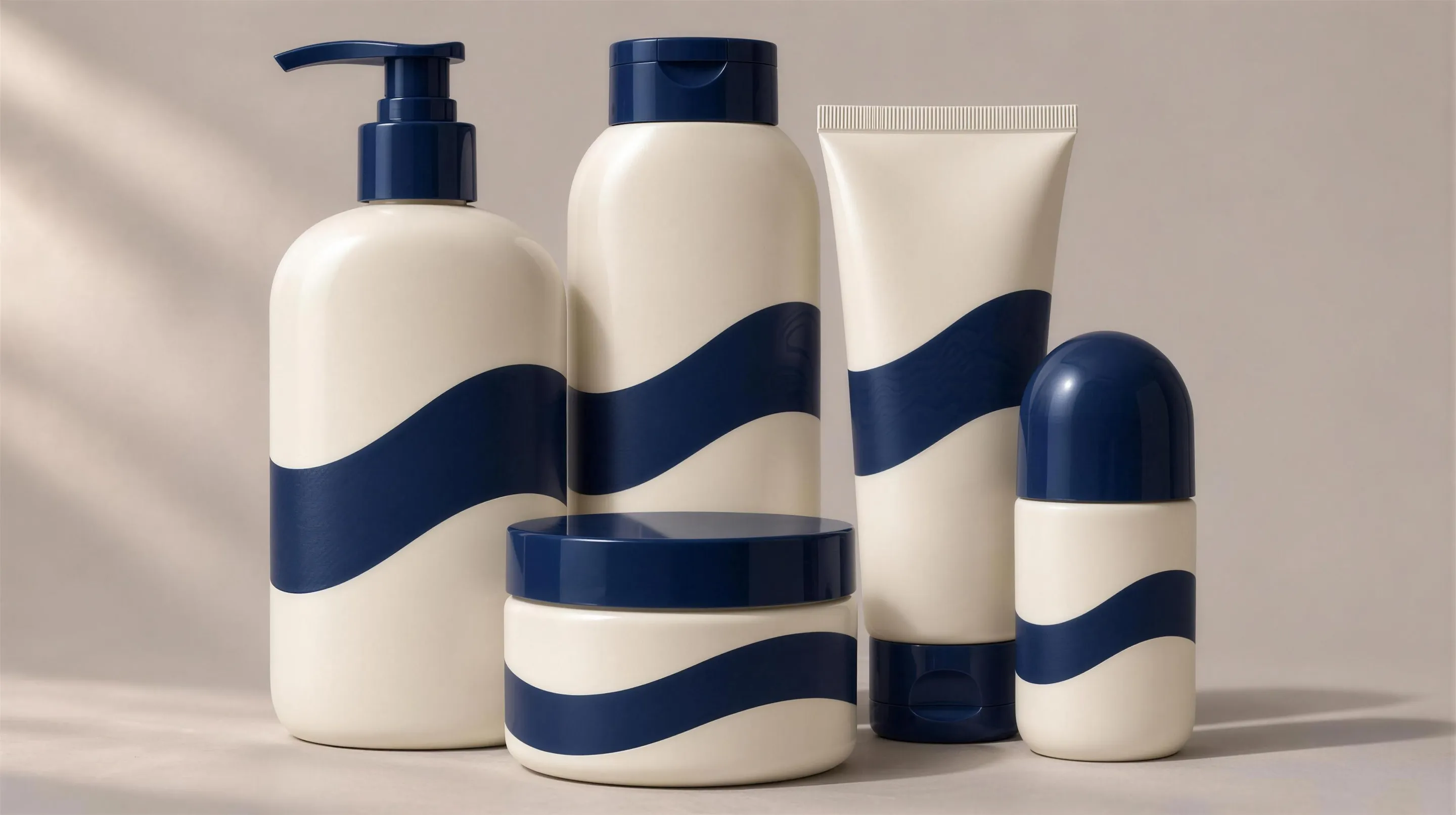
A shared fragrance family, consistent bottle colour and clear naming make the products look like one brand rather than random items. If you are still shaping the brand itself, our brand development page explains how we approach this from the first idea.
Formula choices, concentration and dosage
The formula is where your product either earns repeat purchases or quietly disappears. Ask the manufacturer to explain the active content of each product, not only the price per litre.
What drives performance
- Surfactant level and type: this largely determines cleaning power and foam in washing-up liquid, surface cleaners and laundry liquids.
- Concentration: a concentrated laundry liquid needs a smaller dose per wash, which changes the bottle size, the number of washes you can claim and the freight cost per wash.
- Viscosity: shoppers often read a thicker product as a stronger one, but thickness and real performance are not the same thing. Agree a viscosity range so batches look consistent.
- pH: acidic toilet cleaners tackle limescale, alkaline products cut grease. The pH also affects which hazard statements end up on the label.
- Preservation and stability: water-based products need to stay stable through storage, transport and the shopper’s cupboard.
Dosage claims
Dosage instructions must match the formula: cap volume, concentration and the claimed number of washes have to line up. For laundry products, ask how the dose changes with water hardness.
Fragrance and colour
Fragrance is often the reason a shopper buys again, and one of the trickiest parts of a cleaning range.
- Choose a fragrance family per line: citrus for washing-up liquid, floral or cotton for laundry, pine or ocean for toilet products are common choices.
- Check allergens: many fragrances contain allergenic substances that may need to be listed on the label above certain levels.
- Test fragrance in the final formula: some fragrances are not stable in bleach or at very high or low pH.
- Colour with care: dyes must be stable in the product and should not stain surfaces or fabrics.
Packaging: bottles, triggers, closures and refills
Packaging has to sell the product on the shelf and keep a liquid inside its container through a long journey.
Bottle shapes and closures
- Washing-up liquid: squeezable bottles with a flip-top or push-pull cap., tested for drips.
- Surface cleaners: bottles with trigger sprays., checked for leaks when lying on their side.
- Toilet cleaners: angled-neck bottles so the gel reaches under the rim.
- Laundry liquids: bottles with a measuring cap and a drip-back spout.
Child-resistant closures and tactile warnings
Under the EU CLP rules, certain hazardous mixtures sold to the general public must have child-resistant fastenings and, in some cases, a tactile warning of danger for visually impaired users. Whether your product needs them depends on its hazard classification. Requirements differ by country, so confirm them for each destination market before ordering closures.
Refill packs
Refill pouches or larger refill bottles are increasingly expected, especially for surface sprays and hand dishwashing liquids. They need their own labelling and drop testing. You can explore more options on our packaging page.
Labelling and safety documentation
This is the area where private label cleaning products most often run into trouble. The rules below are a general overview for the EU; requirements vary by country and must always be confirmed for the market where you will sell.
EU CLP hazard labelling
The EU CLP Regulation (EC) No 1272/2008 sets how chemical mixtures are classified and labelled. Depending on the classification, a cleaning product label may need hazard pictograms, a signal word, hazard and precautionary statements, the supplier’s contact details and, for many mixtures, a Unique Formula Identifier (UFI) linked to a poison centre notification.
Detergent ingredient labelling
The EU Detergents Regulation (EC) No 648/2004 requires certain ingredient information on detergent labels, such as ranges for some ingredient groups, preservatives, enzymes and listed fragrance allergens, plus dosage instructions for laundry products. A fuller ingredient list is typically made available online.
Safety data sheets
Professional and trade buyers will usually ask for a safety data sheet (SDS) for each product, prepared in the format required in the destination market and in its local language.
| Item to prepare | Why it matters |
|---|---|
| Hazard classification of each formula | Decides pictograms, closures and transport status |
| Label artwork in the local language | Shoppers and inspectors must be able to read it |
| Safety data sheet per product | Required by many buyers and logistics partners |
| Ingredient and allergen information | Detergent labelling and website disclosure |
| UFI or local poison centre notification | Needed for many hazardous mixtures in the EU |
Outside the EU, Middle Eastern and African markets each have their own registration, language and labelling rules. Plan time for them in the project schedule.
Sampling and benchmark comparison
Never approve a cleaning product on the scent of a sample alone. Pick a benchmark, usually the product you want to compete with on the target shelf, and compare side by side.
- Washing-up liquid: foam height, how many plates are cleaned before foam collapses, and skin feel.
- Surface cleaners: grease removal, streaks on glass and stainless steel, and drying time.
- Laundry liquids: stain removal at the temperature your shoppers actually use, plus fragrance on dry laundry.
- Toilet cleaners: how the gel clings to the bowl and how it handles limescale.
Record the results, keep reference samples of the approved version and use them as the standard for every future batch.
Logistics of liquids
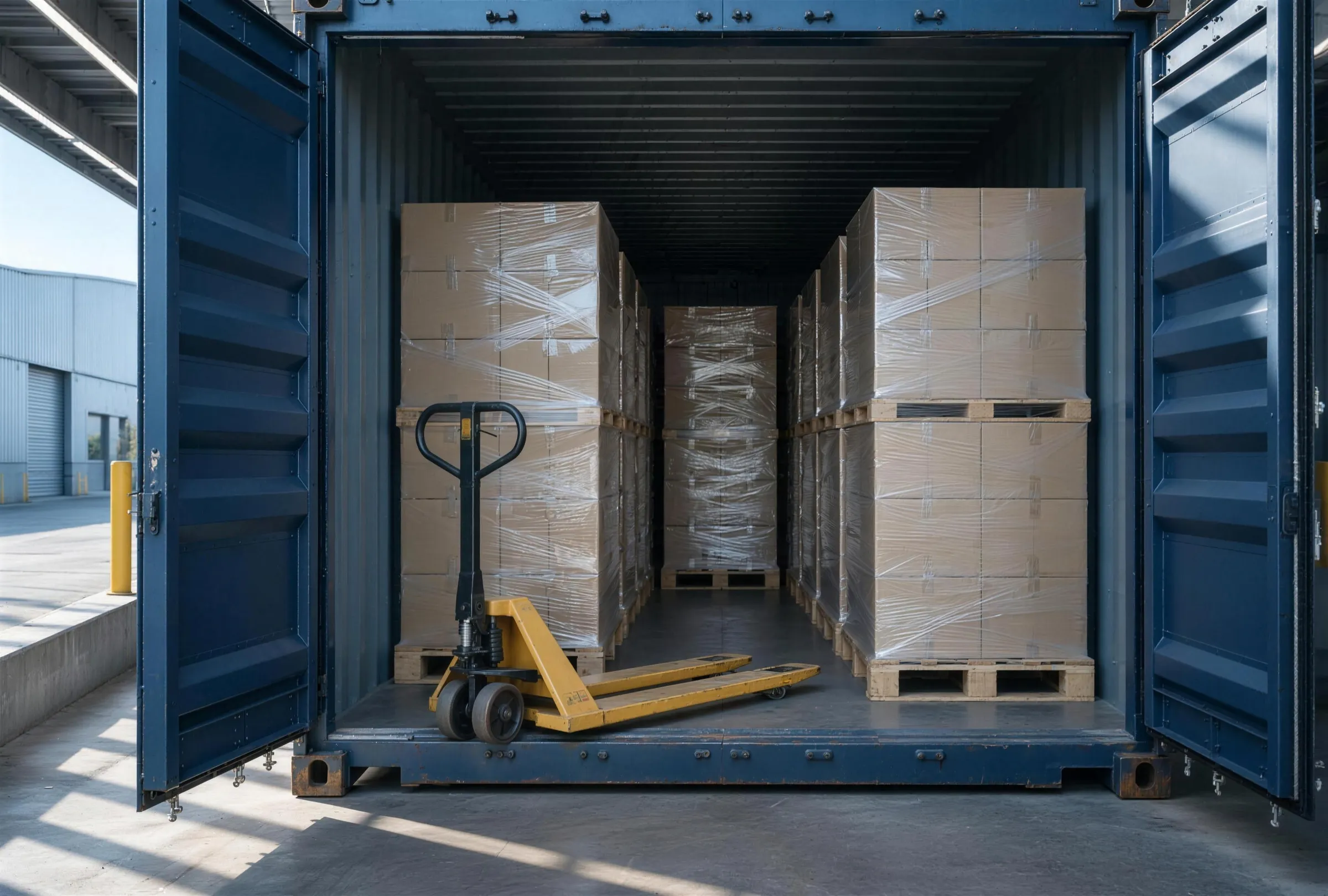
Liquids are heavy: a container often reaches its weight limit before it runs out of space, so judge the price per litre together with the freight cost per unit.
- Leak prevention: induction seals, correctly torqued caps and shrink sleeves on triggers reduce leaks in transit.
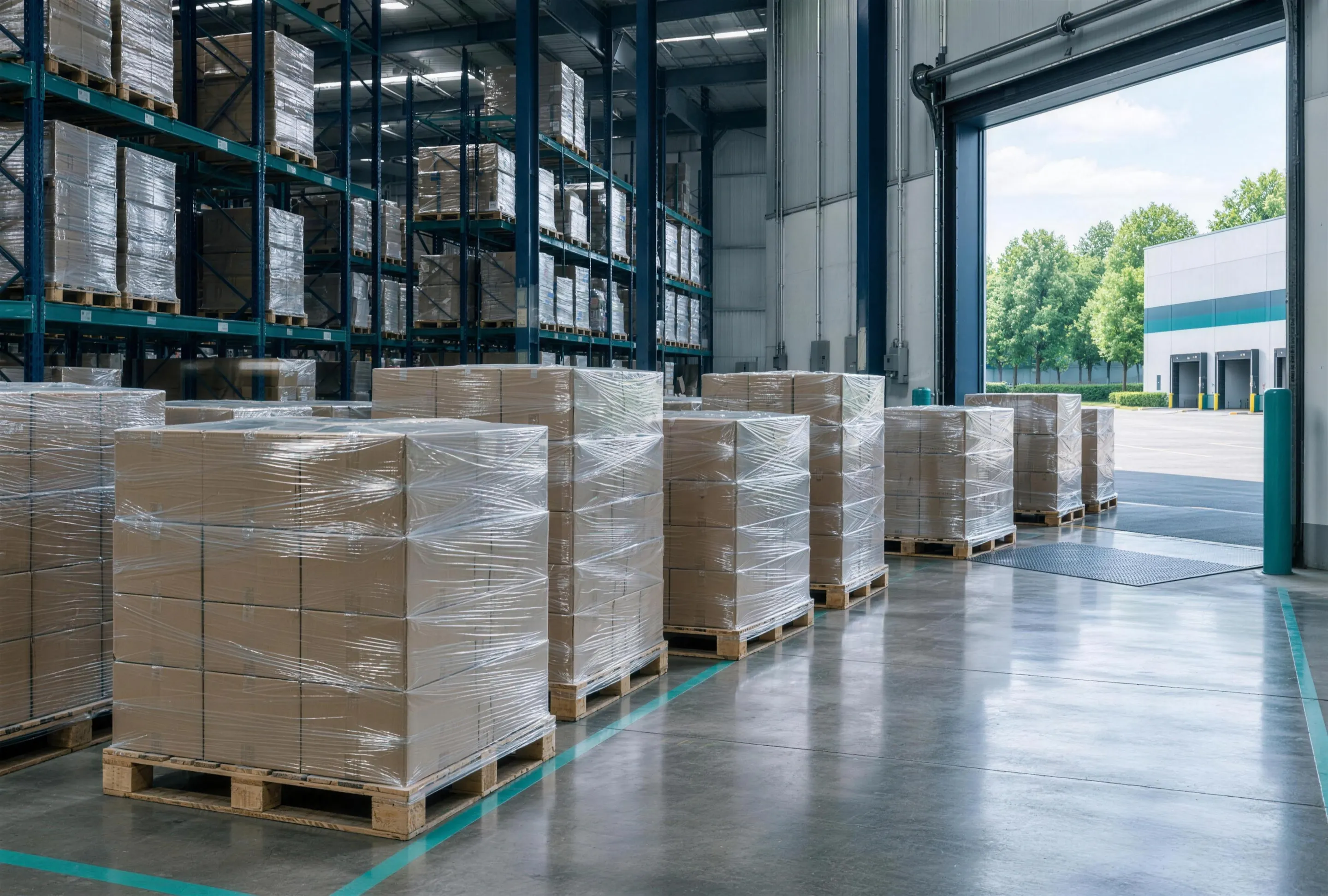
- Cartons and pallets: cartons strong enough for stacking, plus stretch wrap and corner boards.
- Temperature: some formulas thicken, separate or lose colour in very cold or very hot conditions.
- Transport classification: some cleaning products may be regulated as dangerous goods for transport. Section 14 of the safety data sheet shows this, and your forwarder will need it before booking.
- Shipping terms: agree Incoterms such as FOB, CIF or DAP early so it is clear who handles freight and insurance.
Frequently asked questions
How many products should a new private label cleaning range have?
There is no fixed number. Many brands launch with a small core of high-rotation items, such as washing-up liquid, a surface spray and a laundry liquid, then add more once those lines prove themselves.
Do all cleaning products need child-resistant caps?
No. In the EU, child-resistant fastenings are required only for certain hazardous mixtures sold to the general public, depending on their classification. Check each formula’s classification and confirm the requirement for every destination market.
What documents do I need to sell cleaning products in the EU?
At a general level, you will usually need CLP-compliant labels, detergent ingredient labelling, a safety data sheet for each product and, for many hazardous mixtures, a poison centre notification with a UFI. Requirements differ by country, so confirm them locally.
Can a private label cleaning product match a leading benchmark?
Often it can come close on the points shoppers notice, such as cleaning power, foam and fragrance, if the formula is developed and tested against that benchmark.
Start your cleaning products range
Mefsa Foreign Trade has been working with brands since 2017 from its head office in İzmir, sourcing the right manufacturer in Türkiye, following production on site and managing export documents and freight. Through our in-house design team, we also handle label and packaging design. You can see the category on our cleaning and household products page.
If you are planning your own range, send us your project and tell us which products, markets and quantities you have in mind.